Wooden Sink & Washer Playset: Cleanup Role-Play Fun
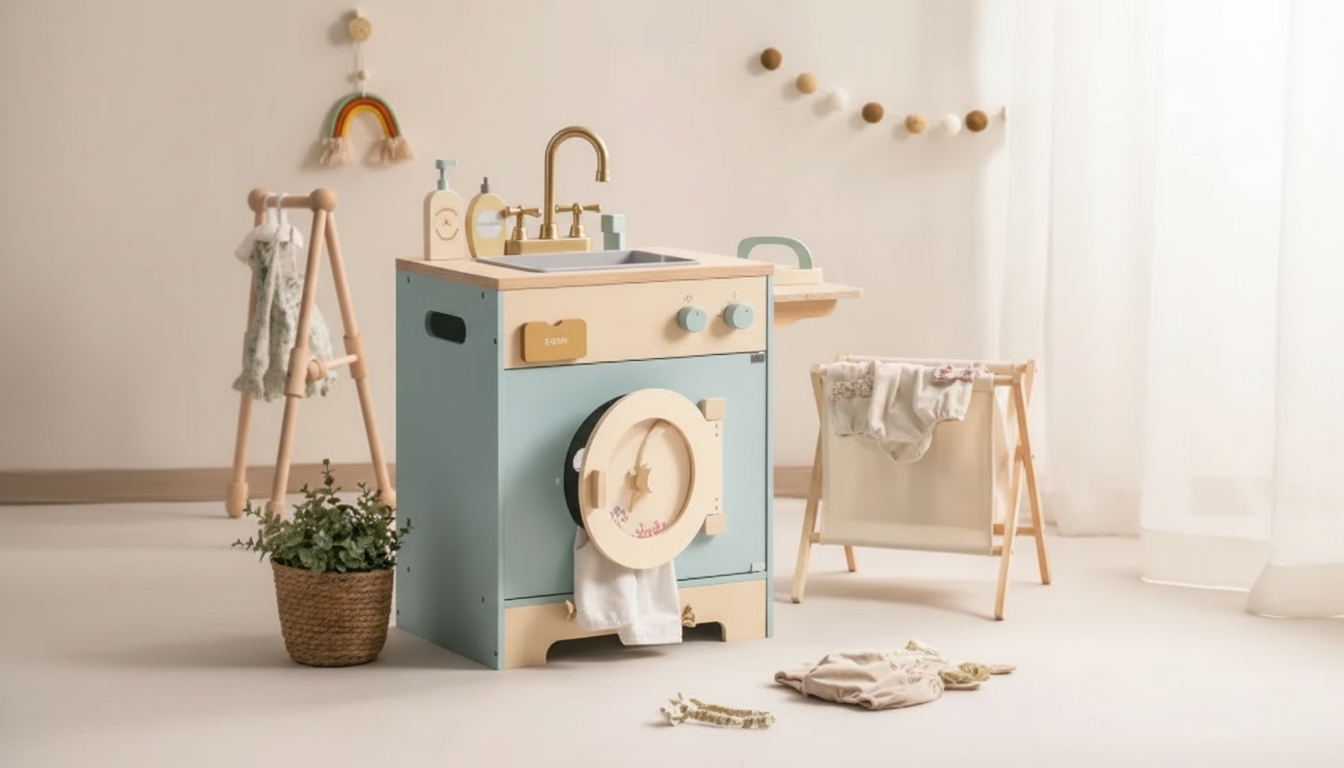
Wooden Kitchen Washer Playset with Sink and Accessories: Water Play, Cleanup Fun, and Everyday Skills
A wooden kitchen washer playset with a working-style sink and accessories turns pretend chores into hands-on play. It encourages role-play, fine-motor practice, and simple routines like rinsing, sorting, and putting things away—without needing a full-size kitchen setup. For many kids, “cleaning up” feels more inviting when it’s their own station: sized for independence, built for repeat play, and open to whatever story they’re acting out that day. For more guidance, see 8 Best Wooden Play Kitchen Sets For Toddlers and Kids ….
Play researchers and pediatric experts consistently highlight how pretend play supports healthy development and learning through everyday experiences. If you’d like a deeper dive into why imaginative, hands-on play matters, see the American Academy of Pediatrics guidance on play and development: The Power of Play. For further reading, see A DIY Play Kitchen with “Running Water”.
What this playset includes
- Wooden kitchen-style station with integrated sink area for pretend washing
- Washer-inspired play elements that support sorting and “laundry day” role-play
- Accessory set for washing, rinsing, and organizing pretend items
- Kid-friendly size for independent play in a bedroom, playroom, or living area
- Sturdy wood construction designed for repeated everyday play
What makes sink-and-wash play different from a standard toy kitchen is the built-in rhythm: pick items up, “wash,” set aside, and reset the space. That loop tends to keep kids engaged longer because there’s always a next step.
Why kids stay engaged with sink-and-wash role-play
- Open-ended scenarios: washing dishes, rinsing pretend produce, cleaning up after cooking play, or doing “laundry”
- Cause-and-effect learning through turning knobs, moving pieces, and placing accessories in the right spots
- Comforting routine play that mirrors what kids see caregivers doing daily
- Shared play: siblings can split roles (washer, dryer, sorter, kitchen helper) to reduce conflicts
This kind of “daily life” pretend play also aligns with how children build understanding over time: they repeat familiar actions, then gradually add complexity (new roles, longer sequences, more detailed stories). If you’re interested in the broader idea of learning through stages and repeated experiences, Britannica’s overview of Piaget’s cognitive development theory is a helpful reference: Piaget’s stages of cognitive development.
Skills it supports during everyday play
- Fine-motor control from grasping small accessories, twisting knobs, and placing items precisely
- Language growth through role-play dialogue (requests, sequencing, naming tools and actions)
- Early math concepts like sorting by type/color and counting items into “loads”
- Executive function practice: step-by-step routines (wash → rinse → dry → put away)
- Social skills like taking turns, negotiating roles, and cooperative cleanup
One of the biggest “wins” is that the play naturally encourages follow-through. Instead of stopping at the fun part (the pretend cooking or pretend laundry), kids often keep going into cleanup—because cleanup is the game.
Play ideas that add variety (no extra toys required)
- Speed round: set a short timer and “wash” a set number of items, then switch roles
- Sorting challenge: group accessories by category (cleaning tools vs. kitchen items) before putting them away
- Story prompts: run a pretend café, then do the end-of-day wash and reset
- Color hunt: match play items to nearby safe household colors (napkin, towel, placemat) and “rinse” them
- Responsibility game: after playtime, kids “close the kitchen” by storing accessories in their spots
To keep it feeling fresh, change only one variable at a time: a new role (inspector, customer, helper), a new rule (quiet washing, whisper café), or a new order of steps (sort first, then wash). Small tweaks create big replay value.
Quick comparison: what to look for in a sink-and-washer playset
Not all sink-and-wash stations play the same. A few practical features make the difference between a toy that’s used daily and one that gets ignored after a week.
Sink-and-washer playset checklist
| Feature | Why it matters | What to check |
|---|---|---|
| Stable frame | Reduces tipping and wobble during active role-play | Wide base, balanced design, sturdy joints |
| Sink area | Adds water-themed pretend play and routine practice | Depth/space for pretend rinsing; easy-to-wipe surfaces |
| Accessory storage | Encourages independent cleanup and organization | Hooks, shelves, bins, or dedicated slots |
| Accessory variety | Keeps play fresh across weeks | Tools for washing and organizing; multiple item types |
| Shared-play space | Helps siblings/friends play together peacefully | Side access and enough countertop/play surface |
Where it fits best at home
Care, setup, and safe play habits
Featured products
- Wooden Kitchen Washer Playset with Sink and Accessories — a compact wooden station designed for washing-and-cleanup role-play, encouraging routines, sorting, and cooperative play. Price and availability can change; check the product page for current details and images.
- RGB Wireless Bluetooth 5.3 Speaker — an easy way to add “cleanup music” or a pretend café soundtrack to role-play sessions, helping kids stay in the routine longer. Price and availability can change; check the product page for current details and images.
FAQ
Is a wooden sink-and-washer playset better than plastic?
Both can be great, but wooden sets often feel sturdier, stay put better during energetic play, and look more like real furniture in shared spaces. For any material, check for smooth edges, a durable finish, and stable construction.
What age is this kind of playset best for?
It typically fits best for preschool through early elementary ages, depending on accessory size and the child’s interest in role-play. Younger kids may enjoy it too with supervision, especially if small pieces are included.
How can kids play with the sink without making a mess?
Keep it dry for pretend play, set a towel or mat underneath, and use clear “no real water” rules unless the manufacturer specifically allows water use. Focusing on routines—wash, rinse, dry, put away—delivers the fun without spills.



Leave a comment