2-Speed Electric Grinder for Baby Food: Smooth, Safe Purees
Why a 2-Speed Electric Grinder Helps with Baby Food
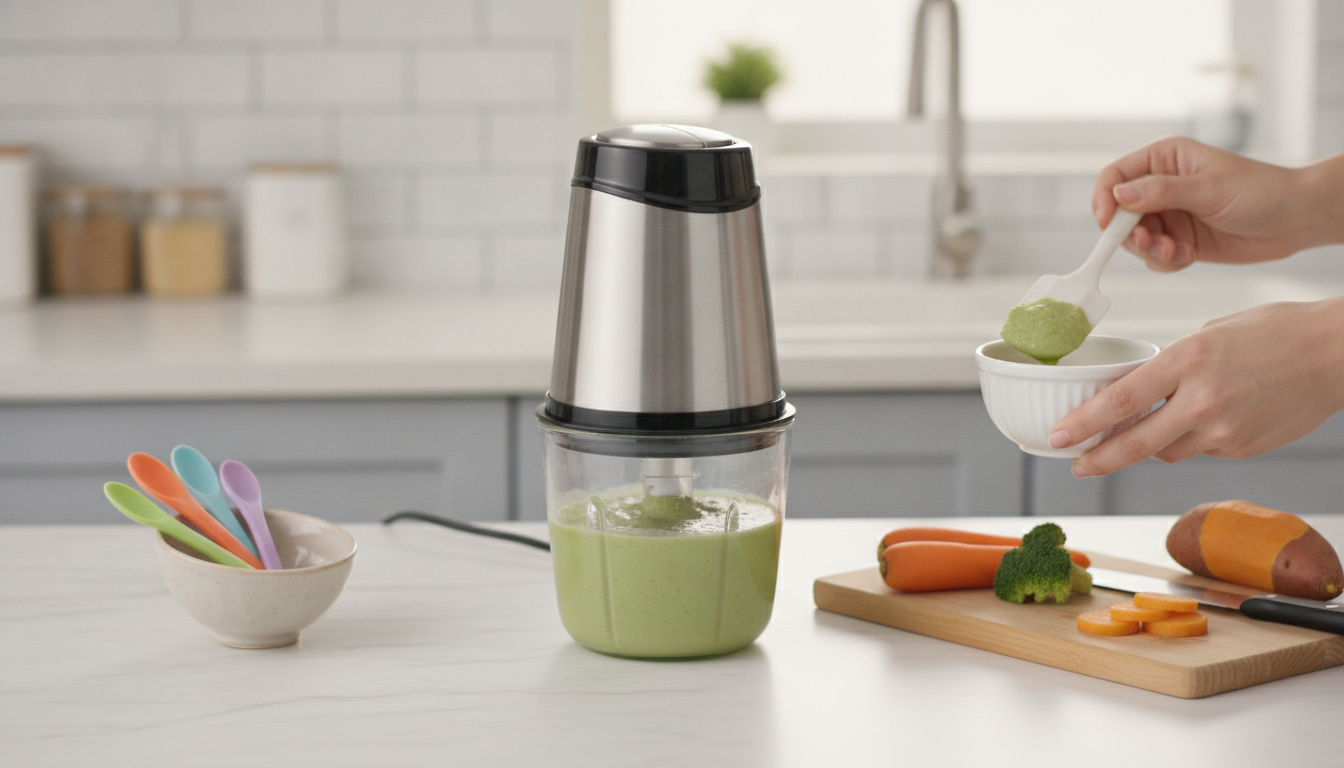
A compact electric meat grinder with stainless steel blades and two speed settings can make baby food prep less fussy and more consistent. Instead of struggling to hand-mince meats or mash vegetables into a uniform texture, a small grinder helps break down fully cooked ingredients quickly—especially when time is tight on weekdays. With the right speed choice, careful handling, and prompt cleanup, it’s easier to create spoonable purees and soft, stage-appropriate blends.
What Makes This Grinder Useful for Baby Food Prep
Baby food often needs a smoother, more predictable texture than “regular” chopped food. A 2-speed grinder supports that goal by letting you control how aggressively ingredients are processed.
- Two speeds for better texture control: Use a gentler setting for soft foods and controlled pulsing, then switch to a faster setting to refine meats and denser vegetables.
- Stainless steel blades for consistent results: Durable blades resist rust and help maintain sharpness, supporting more even chopping and fewer stringy bits from tender meats.
- Electric operation for small daily batches: Processing a few ounces at a time (instead of hauling out bulky gear) fits common baby-feeding routines.
- Works best with good cooking + moisture management: Properly cooked foods plus a little broth, cooking liquid, breast milk, or formula can help you reach a smoother consistency without overworking the motor.
How to Use 2 Speeds to Get the Texture You Want
Great texture starts before the grinder turns on. Begin with ingredients that are fully cooked and tender: meats should be cooked through and easy to shred; vegetables should mash easily with a fork.
- Low speed: Ideal for the first breakdown of soft ingredients (like cooked zucchini or banana) and for pulsing when you want control.
- High speed: Helpful for refining cooked meats, dense vegetables, and mixtures that need a smoother finish.
- Small batches matter: Overfilling can cause uneven processing. Stop, scrape down, and redistribute between pulses if needed.
- Add liquid gradually: Too much liquid can turn a puree watery; too little can create dry crumbles and strain the machine.
Speed Guide for Common Baby Food Ingredients
| Food type | Prep before grinding | Recommended speed | Texture goal | Helpful tip |
|---|---|---|---|---|
| Cooked chicken or turkey | Cook until very tender; cut into small pieces | High (finish with short pulses) | Fine mince that can be thinned to puree | Add warm broth a teaspoon at a time to prevent dry crumbles |
| Cooked beef | Slow-cook or braise until shreddable; remove gristle | High | Very fine mince | Chill slightly after cooking to make trimming easier; re-warm with liquid for blending |
| Cooked fish (boneless) | Cook until flaky; check carefully for bones | Low to High (quick finish) | Soft, fine flakes | Avoid over-processing; short bursts preserve a smoother, less gummy texture |
| Soft vegetables (peas, zucchini) | Steam until very soft | Low | Chunk-free mash | Drain well to prevent watery puree |
| Dense vegetables (sweet potato, carrot) | Roast/steam until easily pierced | Low then High | Silky puree when thinned | Start low to break down, finish high for smoother consistency |
| Cooked legumes (lentils) | Cook until collapsing | Low | Thick puree | Rinse and cook until very soft; add cooking liquid back as needed |
Stainless Steel Blades: Performance and Care
Blade quality affects both texture and efficiency. Sharper edges tend to cut more cleanly, producing more uniform particles—useful when aiming for smoother textures that are easier for babies to handle.
- Prompt washing helps: Stainless steel resists corrosion, but it still benefits from quick cleaning and thorough drying rather than long soaking.
- Inspect regularly: Nicks or bending can lead to uneven grinding and extra strain on the motor.
- Handle safely: Clean with care and store blades in a way that protects both hands and the cutting edge.
Safe Handling for Baby Food: Cooking, Cooling, and Storage
Infants and young children are more vulnerable to foodborne illness, so safe cooking and quick chilling matter just as much as texture. Keep the basics front and center: clean surfaces, separate raw and cooked foods, cook thoroughly, and chill promptly. For additional guidance, reference the CDC’s food safety steps and the USDA “Danger Zone” temperatures.
Practical Workflow for Quick Weekday Prep
Cleaning and Maintenance for Reliable Results
When This Type of Grinder Is a Good Fit (and When It Isn’t)
Product Snapshot: Electric Meat Grinder with Stainless Steel Blades & 2 Speeds for Baby Food
If the goal is straightforward baby food prep with controllable texture, the Electric Meat Grinder with Stainless Steel Blades & 2 Speeds for Baby Food is designed for small-batch processing of cooked meats and soft vegetables. Two speeds support a gentle start and a finer finish, while stainless steel blades help deliver consistent chopping.
More In-Stock Picks
- RGB Wireless Bluetooth 5.3 Speaker
- Monster-Themed Cat Tree Tower
- Large Indoor Cat House with Removable Flower Bed
FAQ
Which speed should be used for baby food purees?
Use the lower speed to start breaking down soft cooked foods and to pulse with control. Switch to the higher speed to refine texture for cooked meats and denser vegetables, adding liquid gradually and working in small batches.
Can cooked meat be ground for babies in an electric grinder?
Yes—use fully cooked, very tender meat, trim gristle, cut into small pieces, and grind in short bursts. Thin with warm broth (or another appropriate liquid) until it reaches a spoonable consistency.
How long can homemade baby food be stored safely?
Refrigerate prepared baby food promptly and use it within a short window; freeze portions that won’t be used soon. Follow established food-safety guidance for cooling, storage times, and reheating.






Leave a comment