Portable Tire Inflator Guide: Cars, Bikes & Emergencies
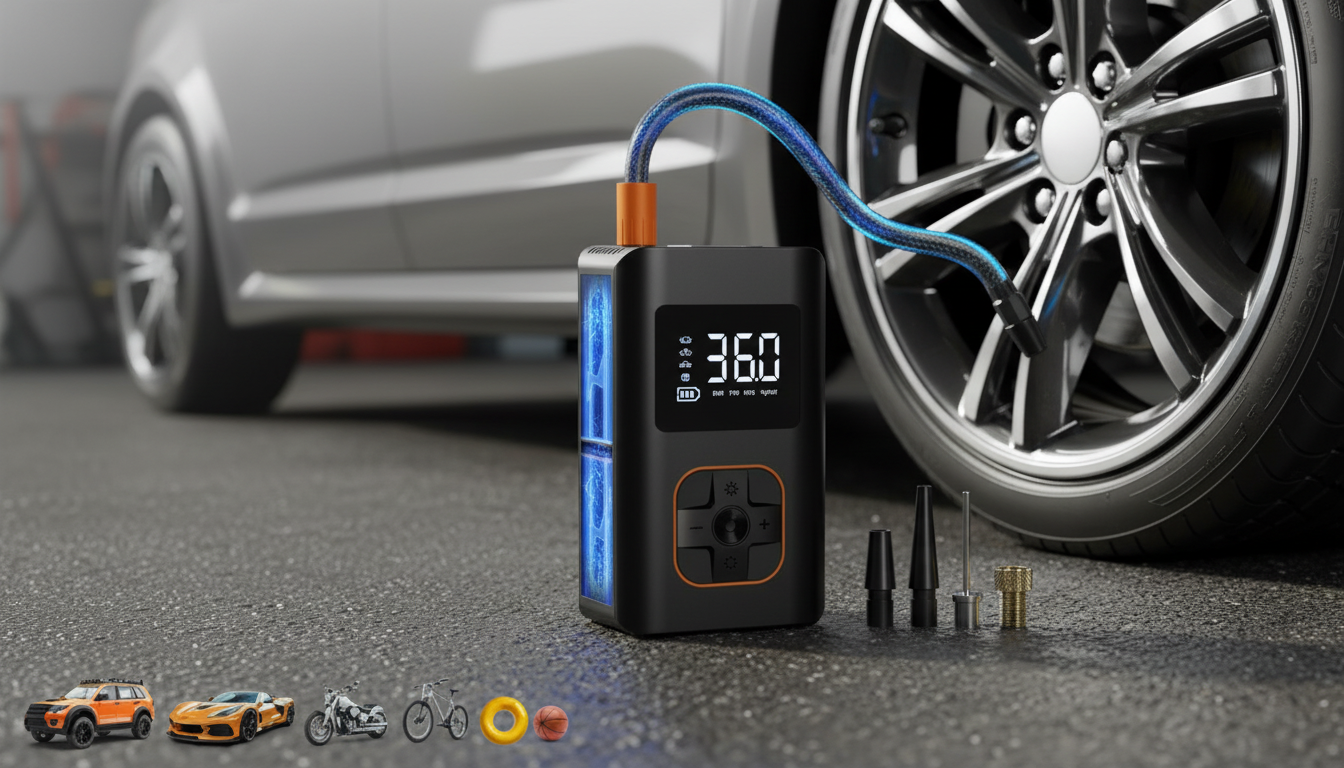
Stay Ready: A Portable Tire Inflator for Cars, Bikes, and Everyday Emergencies
Keeping tires properly inflated improves handling, braking, and overall driving confidence—especially when weather changes or a slow leak appears. A portable air compressor makes it easy to top off car tires at home, add air before a road trip, or quickly inflate bike tires and sports gear without hunting for a gas-station pump. For many drivers, it’s one of those small tools that pays off the first time a low-pressure warning light pops on at an inconvenient moment.
When a Portable Tire Inflator Helps the Most
A compact inflator isn’t just for major blowouts—it’s mainly for the common, frustrating situations that happen between scheduled maintenance. These are the moments when having quick access to air can make a real difference.
- Unexpected low-pressure warning or visibly soft tire that needs a quick top-up to reach a safer driving pressure
- Seasonal temperature swings that naturally change tire pressure and trigger dashboard alerts
- Pre-trip checks for highway driving, towing, or carrying heavier loads
- Cycling and commuting: quick inflation for bike tires before a ride
- Inflatables and balls: convenient air source when a full-size shop compressor isn’t available
For more tire safety fundamentals, the NHTSA Tire Safety guide is a solid reference on pressure, tread, and inspection basics.
What to Look For in a Good Portable Air Compressor
Portable inflators vary widely—some are best for occasional top-offs, while others are built for repeated use. A few practical specs and design details can make ownership much easier.
- Pressure range and accuracy: A clear display and reliable cutoff help prevent under- or over-inflation.
- Power and runtime: Consider whether it runs from a built-in battery, a 12V car outlet, or both.
- Airflow speed: Faster inflation saves time when topping up multiple tires.
- Hose length and reach: Easier access to all four wheels without awkward positioning.
- Night usability: A built-in light can help when inflating on the shoulder or in a dark garage.
- Nozzle compatibility: Adapters expand use to bikes, sports balls, and inflatable items.
- Heat management: Longer runs can warm the unit; short bursts and rest intervals can extend lifespan.
AAA also offers straightforward tire maintenance guidance that pairs well with an at-home inflator routine: AAA Tire Maintenance and Safety.
Highlights of the Tire Inflator Portable Air Compressor
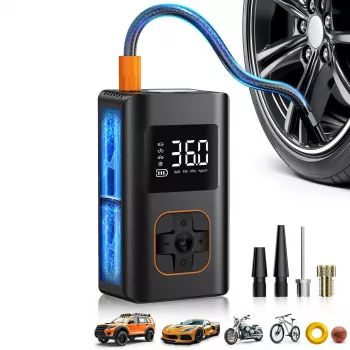
If the goal is simple readiness—something that can live in a trunk or garage and handle routine top-offs—this Tire Inflator Portable Air Compressor is designed around convenience and everyday use. It’s well-suited for drivers who want an accessible backup plan for low-pressure surprises, plus the flexibility to inflate other items around the house.
- Designed for convenient tire top-ups and general inflation tasks
- Compact form factor suited for storing in a trunk, glove box, or garage shelf
- Simple operation flow: set target pressure, connect, inflate, and re-check
- Useful add-ons to prioritize: bright display, built-in light, and multiple adapters (if included)
- A practical choice for everyday drivers who want an easy backup inflation option
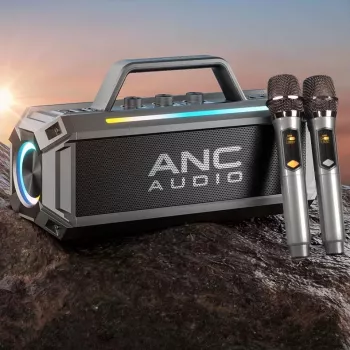
For a separate road-trip essential that doesn’t take up much room, consider pairing your emergency kit with an RGB Wireless Bluetooth 5.3 Speaker for hands-free listening during stops and downtime.
Quick Fit Guide (Typical Uses)
| Use | What to check before buying/using | Helpful features |
|---|---|---|
| Car tires | Recommended PSI from door-jamb sticker; ensure valve access | Auto-stop at set pressure, clear digital readout, sturdy hose |
| Bicycle tires | Valve type (Schrader/Presta) and adapter needs | Adapters, precise increments for higher-pressure tires |
| Motorcycle/scooter | Correct PSI and smaller tire volume | Accurate gauge, compact head/nozzle |
| Sports balls | Needle adapter required | Included needle, low-pressure control |
| Inflatables | Correct nozzle size; avoid overinflation | Multiple tips, steady low-to-mid pressure output |
How to Inflate a Tire Correctly (Step-by-Step)
Correct inflation is less about “filling it up” and more about hitting the right pressure for your vehicle. For the most consistent results, check tires when they’re cold (before driving or after the car has been parked for a while).
Bridgestone’s primer is a helpful reminder on why correct PSI matters for tire life and performance: Tire Pressure Basics.
Safety and Best Practices
Troubleshooting Common Inflation Problems
Care, Storage, and Readiness Checks
FAQ
What PSI should car tires be inflated to?
Use the vehicle manufacturer’s recommended PSI listed on the driver-side door jamb label. The PSI molded on the tire sidewall is the tire’s maximum rating, not the normal day-to-day target for your specific vehicle.
Can a portable tire inflator fix a flat tire?
A portable inflator can add air to a low tire, which may help you reach a safer pressure temporarily. It won’t repair punctures, leaking valve cores, or sidewall damage—those require a plug/patch or professional service.
How long should it take to inflate a car tire with a portable compressor?
It depends on tire size and how low it is, but topping off a few PSI can take just a couple of minutes per tire, while inflating from very low pressure can take longer. Some units also need short rest breaks if the motor housing becomes hot.



Leave a comment