Modern Wooden Cat Tree Tower: Condo, Nest & Scratch Posts
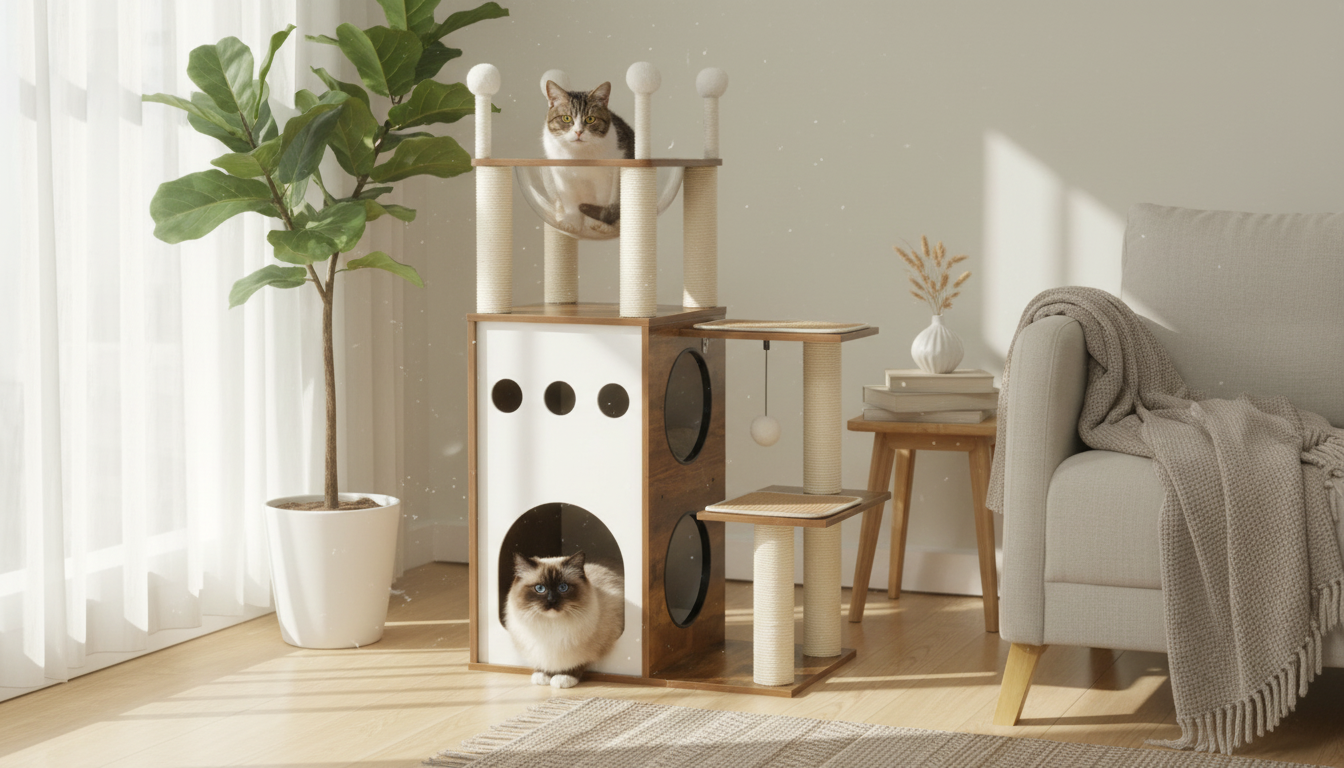
Modern Wooden Cat Tree Tower with 2-Floor Condo, Capsule Nest & Scratching Posts
A modern cat tower can look like furniture while still giving cats what they crave: vertical territory, private hideouts, and reliable scratch zones. This wooden cat tree tower combines a 2-floor condo, a capsule-style nest, and multiple scratching posts to support climbing, resting, and daily nail care—without turning the living room into a carpeted eyesore.
Well-planned cat furniture isn’t just about keeping cats busy. It can reduce stress, help multi-cat households share space, and provide predictable places to perch and retreat. For more on why “safe resting spots” and enrichment matter, see the American Association of Feline Practitioners (AAFP) Feline Environmental Needs Guidelines and International Cat Care’s enrichment guidance.
What makes this tower different from standard cat trees
Many cat trees focus on one thing—height, plushness, or a big footprint. This style is built around everyday use: a place to hide, a place to watch, and obvious scratch targets that are easy to reach.
- Modern wooden look that blends into contemporary interiors more easily than fully carpeted towers.
- Multiple rest options: enclosed condo space plus an open capsule-style nest for perching.
- Several scratching posts to encourage consistent use and reduce interest in sofas and rugs.
- Vertical layout that helps indoor cats burn energy and feel secure through elevation.
Layout and features cats actually use
Cats repeat what “works” for them. When a tower supports a natural loop—scratch, climb, perch, nap—it becomes part of daily routines instead of a piece of decor they ignore.
- 2-floor condo supports hiding, napping, and decompression—useful for shy cats or multi-pet homes.
- Capsule nest creates a semi-enclosed perch; many cats prefer a snug edge to rest their chin and watch the room.
- Scratching posts provide a dedicated place to stretch, mark territory, and shed claw sheaths.
- Multi-level design helps create traffic flow: up to perch, down to condo, back to scratch—encouraging repeated interaction.
| Feature | Best for | Placement tip |
|---|---|---|
| 2-floor condo | Privacy, naps, cooling down after play | Place in a quieter corner with a clear view of the room entrance |
| Capsule nest | Perching, people-watching, light dozing | Near a window for visual enrichment (avoid direct heater/AC airflow) |
| Scratching posts | Daily stretching, claw maintenance, scent-marking | Position so the posts are on common paths from sleeping to feeding areas |
| Vertical levels | Confidence-building, exercise, multi-cat spacing | Keep a stable base area and avoid wobble by placing on flat flooring |
Comfort, safety, and stability considerations
A cat tower is only “fun” if it feels trustworthy. Stability and easy access matter more than impressive height, especially for cautious cats or bigger bodies.
- Stable base matters more than height: set the tower on an even surface and avoid thick, squishy rugs that can introduce wobble.
- Help less agile cats succeed: add a small step stool nearby during the first week to make entry to higher areas easier.
- Adjust softness to your cat: if a cat prefers softer textures, add a washable cushion or small blanket inside the condo or capsule (ensure it doesn’t block exits).
- Support healthy scratching habits: trim claws regularly to reduce snagging on fabrics and encourage controlled scratching on the posts.
Scratching is normal feline behavior, not “bad behavior.” The goal is to make the right surface the easiest choice. The ASPCA’s overview of cat scratching behavior is a helpful reminder of why cats do it and why redirection works best.
Training cats to use the condo, nest, and scratching posts
Most cats don’t need formal training—they need the tower to feel familiar, rewarding, and placed in a spot that matches their daily route through the home.
Where this style works best at home
Product snapshot and quick comparisons
If the goal is a balanced daily-use station—hideout + perch + scratch zones—the Modern Wooden Cat Tree Tower with 2-Floor Condo, Capsule Nest & Scratching Posts covers the essentials in a décor-friendly shape.
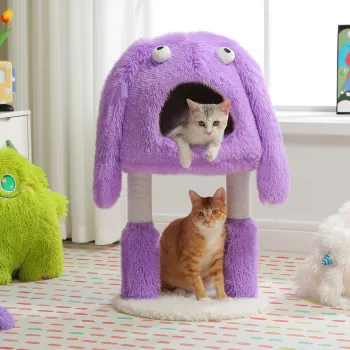
Alternative styles can better match specific cat personalities or room aesthetics. For a themed look, consider the Monster-Themed Cat Tree Tower. If your cat prefers low, enclosed lounging with softer bedding over climbing, the Large Indoor Cat House with Removable Flower Bed is another option.
| Option | Best for | Trade-off |
|---|---|---|
| Modern Wooden Cat Tree Tower with 2-Floor Condo, Capsule Nest & Scratching Posts | Modern décor, mixed rest zones, consistent scratching | Less “plush” feel unless a cushion is added |
| Monster-Themed Cat Tree Tower | Playful look, cat owners who want a themed statement piece | May stand out more visually in minimalist rooms |
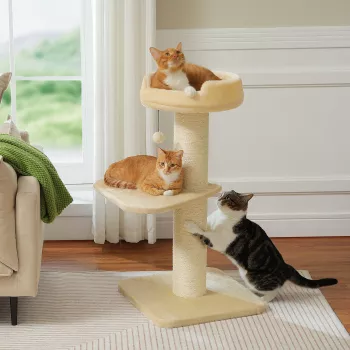
| Large Indoor Cat House with Removable Flower Bed | Cats that prefer low, enclosed hiding and soft bedding | Less vertical territory than a tower |
FAQ
Will a condo-style cat tree help a shy cat feel safer?
Yes—enclosed hideouts can reduce stress by offering predictable shelter and a controlled view of the room. Place the condo in a calm area, add a familiar-scented blanket, and let your cat explore on their own timeline.
How do cats learn to use the scratching posts instead of furniture?
Put the tower near common scratching targets, rub a little catnip or silvervine on the posts, and reward your cat the moment they scratch there. During the transition, cover or block favorite furniture corners so the post becomes the easiest option.
Where should a cat tree go for maximum use?
Place it where your cat already spends time—often a living area with steady foot traffic or near a window for visual stimulation. Make sure it’s stable on flat flooring and positioned so a cat can perch while still seeing pathways and exits.




Leave a comment