4 Ratchet Straps for Motorcycle & Luggage: Secure Loads
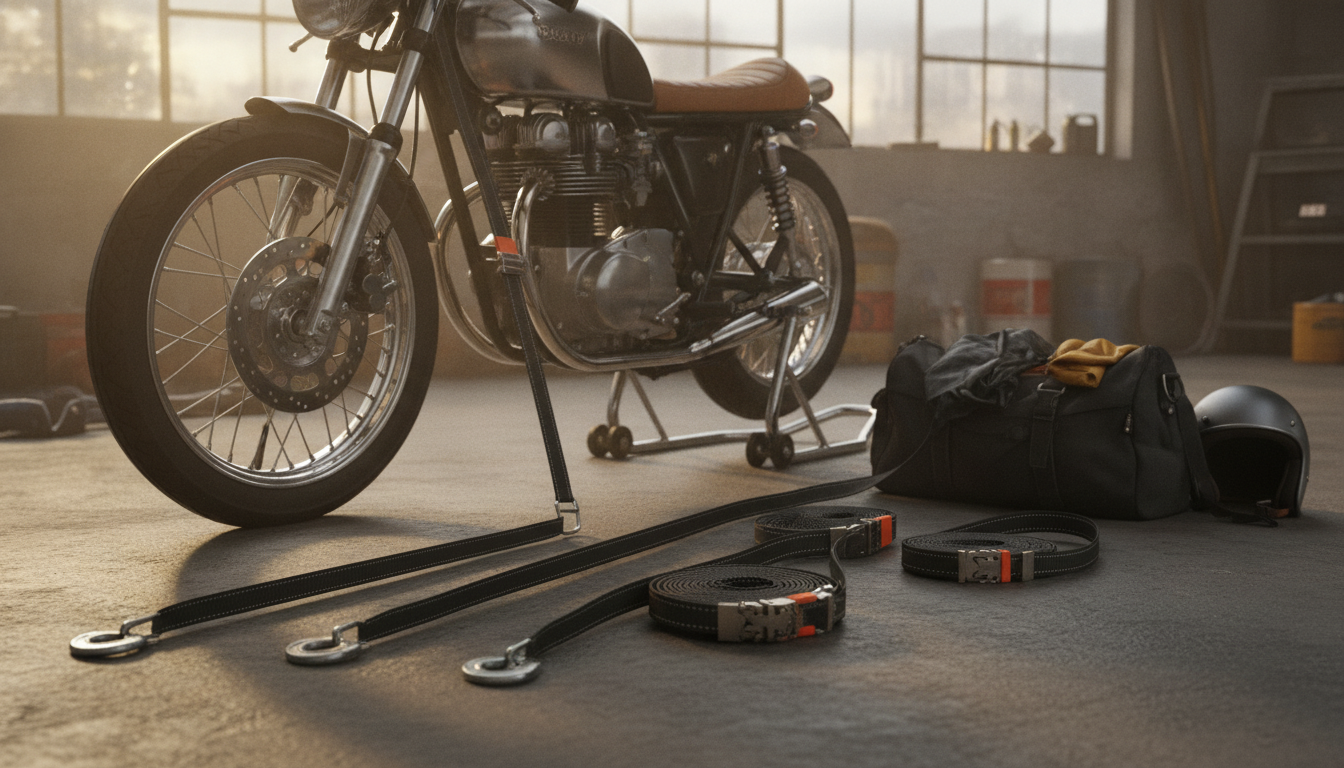
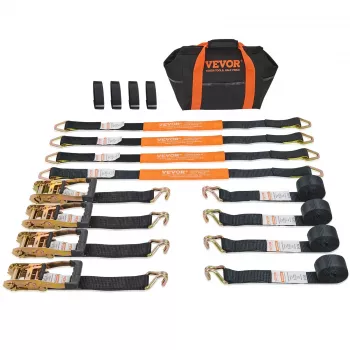
4pcs Ratchet Strap Tie Down Cargo Belt with Metal Buckle for Luggage & Motorcycle
Keeping gear stable matters whether it’s strapped to a motorcycle, packed on a luggage rack, or secured in a trunk. This 4-piece ratchet strap set uses a metal buckle for firm tensioning and repeatable hold, helping reduce shifting, rattling, and tip-overs during transport. For everyday riders, travelers, and weekend movers, the goal is simple: keep the load where you put it, from the first mile to the last.
What’s in the Set
- Includes 4 ratchet tie-down straps for securing multiple items or creating a balanced, two-strap-per-side setup.
- Metal ratchet buckle design intended for controlled tightening and reliable locking under vibration.
- Works well as a go-to kit for travel days, weekend rides, moving boxes, or securing gear to a rack.
Where These Ratchet Straps Work Best
- Motorcycle use: securing tail bags, duffels, camping gear, or spare layers to a rear seat, luggage plate, or sissy bar (when applicable).
- Luggage and travel: keeping suitcases stable on roof racks, hitch carriers, luggage carts, or in a vehicle cargo area.
- Home and moving: bundling boxes, flat-pack furniture, or storage bins to prevent sliding during transport.
- Garage and outdoor: securing coolers, toolboxes, and sporting gear for short trips.
Good tie-downs aren’t just for long hauls. Even short drives can create enough braking and cornering force to shift cargo—especially stacked bins or rounded duffels that like to roll.
Key Features That Matter in Daily Use
- Ratchet tensioning: allows incremental tightening for a snug hold without relying on knots.
- Metal buckle: built for repeated use and resistance to loosening from vibration compared with basic cam buckles in some scenarios.
- Multi-strap flexibility: use one strap for a small load or multiple straps to distribute force evenly across larger or awkward-shaped cargo.
- Better load control: helps minimize sway and movement that can cause scuffs, dents, or shifting weight.
For transport safety, securement is more than “tight.” The strap path, anchor points, and protection at contact edges can be the difference between a stable ride and a damaged bag—or worse, a loose load. For additional guidance, see the FMCSA cargo securement rules and general vehicle loading tips from NHTSA vehicle load and tire safety guidance.
How to Strap Down Cargo Without Damage
- Pick solid anchor points: use rated tie-down points, luggage racks, or frame-mounted anchors rather than plastic trim or weak rails.
- Protect contact areas: add a soft cloth, strap pad, or edge protector where the strap crosses paint, plastic, or sharp corners.
- Balance the pull: use two straps in a “V” or “X” pattern when possible to limit side-to-side movement.
- Tighten in stages: snug both sides first, then ratchet down gradually to keep the load centered.
- Prevent loose ends: tie off or tuck strap tails so they don’t flap into wheels, chains, or hot exhaust parts.
- Do a short re-check: after a few minutes of riding/driving, stop and re-tension if the load has settled.
A practical tip for motorcycles: keep the ratchet mechanism where you can access it without contacting painted panels, and position any metal hardware so it can’t swing into bodywork if the strap loosens slightly.
Quick Setup Steps (Motorcycle + Luggage)
- Place cargo where it’s supported: keep heavier items low and centered; avoid hanging weight far behind the rear axle.
- Route the strap flat: twists can reduce grip consistency and create pressure points.
- Engage the ratchet: feed the webbing through the buckle, remove slack by hand, then ratchet until secure.
- Lock and test: shake the cargo firmly; the load should not shift more than minimal compression movement.
- Before riding: confirm straps are clear of wheels, brake components, chain/belt drive, and exhaust heat.
Choosing the Right Tie-Down Approach
Care, Storage, and Safety Checks
Common Tie-Down Setups and When to Use Them
Tie-Down Patterns at a Glance
| Setup | Best for | Main benefit | Tip |
|---|---|---|---|
| Two-strap V | Tail bag / duffel | Side-to-side stability | Tighten both straps evenly to keep the bag centered |
| Four-point hold | Stacked luggage / bins | Even pressure and reduced tipping | Use edge protection on hard corners |
| Crossed X | Loads that slide forward/back | Multi-direction restraint | Keep straps clear of moving parts and heat sources |
Product Options
- 4pcs Ratchet Strap Tie Down Cargo Belt with Metal Buckle for Luggage & Motorcycle ($33.51) — a compact set for multi-point securing on trips, commutes, and moving days.
- RGB Wireless Bluetooth 5.3 Speaker ($32.51) — a simple add-on for road trips, campsites, and garage days once your gear is strapped down and you want sound on the go.
FAQ
How tight should a ratchet strap be on luggage or motorcycle bags?
Tighten it until the load doesn’t shift when pushed firmly, but stop before you crush hard-shell luggage or noticeably deform soft bags. After a short distance, re-check and re-tension if the cargo settles.
Can ratchet straps scratch paint or plastics?
Yes—webbing and especially metal hardware can rub and leave marks. Use a soft barrier where the strap contacts paint, and position buckles so they can’t tap body panels during vibration.
How many straps are needed to secure a load safely?
It depends on weight, shape, and anchor options: two straps often stabilize a single bag, while a four-point setup is better for larger or stacked loads. Always follow the strap’s Working Load Limit (WLL) and add straps to distribute force when needed.



Leave a comment